


CRI Heads to Court Over US Wind Permits

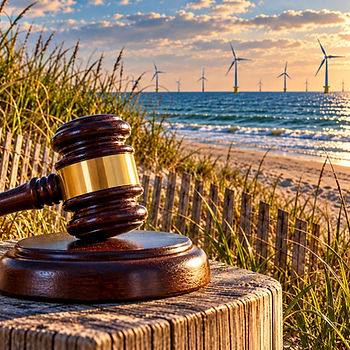
DNREC says US Wind’s offshore wind cables will not affect the beach or dunes at 3R’s Beach. One of DNREC’s own permits suggests the agency was not always so certain.
On Tuesday, September 29, the Caesar Rodney Institute and other plaintiffs will appear virtually before Delaware Superior Court in their challenge to DNREC’s approval of permits for the US Wind Maryland Offshore Wind Project. The case concerns the process DNREC used to approve construction needed to bring offshore wind transmission cables ashore at 3R’s Beach in Delaware Seashore State Park, across the Indian River Bay, and ultimately to a proposed substation near the Indian River Power Plant.
In its answer to the plaintiffs’ opening brief, DNREC argues that the project will not disturb the beach or dunes. According to DNREC, “The only area of land disturbance in the Delaware Seashore State Park would be within the footprint of the parking lot. No dunes or the beach would be affected.” But DNREC’s own Coastal Construction Permit BP-06388 raises a different concern.
The permit specifically warns that “The beach and dune could be altered because of the Horizontal Directional Drilling, such as sinkholes or other surface disturbance. Any dune alterations must be restored.” It goes further, stating that the concern is “not limited to State Parks, but should include adjacent properties.” DNREC’s own US Wind project page also describes the proposed cable landfall as being at 3R’s Beach near the parking lot and “potential dune environments.”
That discrepancy matters because this case is about more than whether offshore wind is good or bad energy policy. It asks whether Delaware followed the proper administrative process before allowing a major industrial project to cross state beaches, dunes, wetlands and waterways.
CRI, the Town of Fenwick Island, Mayor Natalie Magdeburger, Tower Shores Beach Association and two Indian River watermen argue that DNREC failed to provide a meaningful opportunity for public review. Among other issues, the plaintiffs contend that DNREC conducted one joint public hearing covering multiple permits and later obtained additional information from US Wind after the public-comment period had closed without reopening the record for public review. The plaintiffs also challenge DNREC’s treatment of the project under Delaware’s Coastal Zone Act. DNREC disputes those arguments and is defending its permitting decisions.
The Delaware Superior Court will hear oral arguments virtually on Tuesday, September 29 at 9:00 a.m. before Judge Mark H. Conner. The proceeding will be conducted by Zoom. CRI will continue to defend a simple principle: Delawareans deserve a transparent permitting process and the opportunity to examine the information used by their government before decisions affecting our coastline are made.
If you believe this work matters, please consider supporting CRI so we can continue doing it.
Tell Us What You Think
Delaware’s coast belongs to all of us. Should major offshore wind projects move forward without meaningful public review, local input, and protections for Delaware taxpayers?
Add your name and tell Delaware’s elected leaders what you expect before offshore wind construction moves forward.


Comments